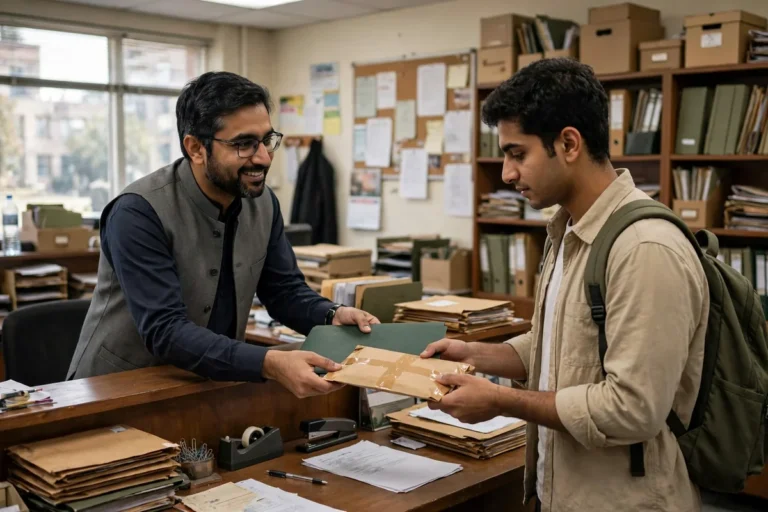

Most students first hear about a domicile certificate when an admission form or a job application asks for one, and suddenly a document they have never needed becomes urgent. A domicile certificate states which district — and therefore which province — you belong to for official purposes. In Sindh, the related document is often called a Permanent Residence Certificate (PRC), and you may see the terms domicile and PRC used together. Neither document is proof of citizenship on its own; it is about your district of residence and, for quota seats and local admissions, where you count as a local candidate.
This guide explains the usual process, the documents people are commonly asked for, and how the route differs by province. There is no single national counter for domicile certificates, so treat anything that describes one province’s steps as the rule for the whole country with suspicion. Your own district office is the authority for your case.
Table of Contents
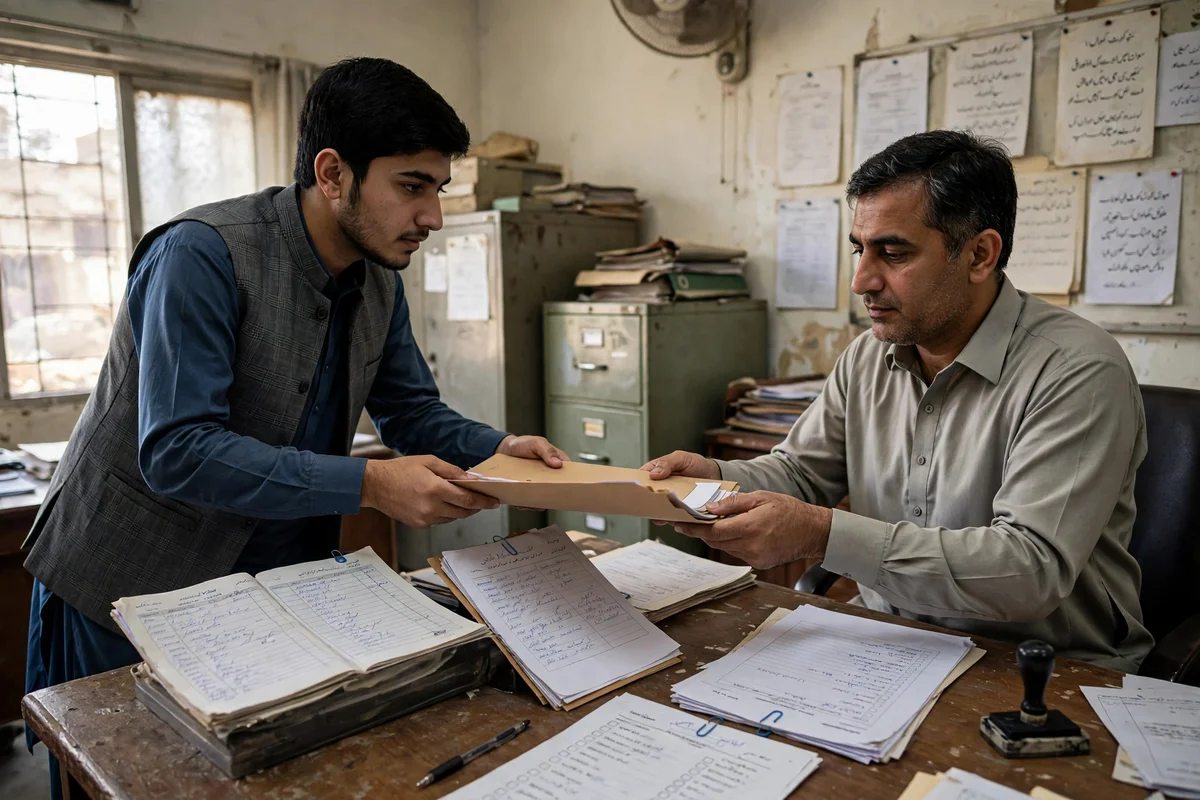
What a domicile certificate is used for
Universities and colleges ask for domicile for provincial and district quotas, and government recruitment often asks for it for the same reason. It can also come up for scholarships and other schemes that reserve places for residents of a particular area. Because the certificate is issued for one district only, getting the district right matters more than getting the form filled in quickly. A certificate for the wrong district does not help you claim a quota somewhere else, and you cannot hold domiciles for two districts at the same time.
If you are applying for admission, check the admission prospectus first. Some institutions ask for the domicile at the application stage, others at the time of enrolment or document verification. Knowing which stage applies to you tells you how much time you actually have — and whether you need to start this week or can wait for a quieter day at the office.
Who issues it, and where you apply
In general, a domicile certificate is issued by the district administration — usually the Deputy Commissioner’s office — for the district where you live. That is the starting point in most of the country, but the front door you use to reach that office now varies:
- Punjab: applications are commonly handled through e-Khidmat Markaz centres, which process the case through the province’s domicile management system. Home-visit facilitator services have also been offered in parts of Punjab for applicants who cannot easily visit a centre.
- Sindh: apply through the Deputy Commissioner’s office of your district. Sindh also has an online domicile portal and app for domicile and PRC applications, where applicants register with their CNIC and mobile number, upload documents, pay, and later download a digitally signed certificate after approval. If the portal route is available for your district, it saves repeated visits; if it is not, the DC office counter remains the route.
- Khyber Pakhtunkhwa: the district and tehsil administration route is common, with local verification forming a larger part of the process. Ask at your tehsil or district office which counter handles domicile cases before you queue elsewhere.
- Islamabad: residents generally apply through the Citizen Facilitation Centre, where staff handle data entry at the counter.
- Balochistan: until any new NADRA-based system actually opens for applications, the Deputy Commissioner’s office remains where you apply. Reports of a move to NADRA centres have circulated, but no start date for applicants had been announced at the time of writing — do not delay an admission or job deadline waiting for a system that has not opened.
The practical lesson is simple: search for your own district’s office, not for a generic “Pakistan domicile form”. A form, fee challan, or affidavit format from another province may be politely refused at your counter.
Documents you will usually be asked for
Exact lists differ by district, and the counter can ask for one more document than the list you found online. The following are the items that come up again and again, so gather them before your first visit rather than after it:
- Your CNIC, original and copy — or your B-Form if you are under 18.
- Your father’s CNIC, and his domicile certificate if he has one. Applicants under 21 are commonly asked for a parent’s documents, since the claim often rests on family residence.
- Proof of residence in the district: a utility bill, property papers, or a rent agreement. A bill in a parent’s name is normal for a student living at home.
- Educational documents, often from Matric onwards, attested as the office requires.
- Recent passport-size photographs.
- An affidavit confirming permanent residence in the district, on stamp paper of the value your district specifies. The stamp-paper value and attestation requirements vary, so confirm them at the counter or on your province’s service listing before you pay a stamp vendor.
- If you are married, your spouse’s CNIC; if you are a government employee, a service certificate may be asked for.
Carry originals as well as copies. Offices commonly want to see the original and keep an attested copy, and a visit fails most often on something small: a blurred photocopy, a name spelled differently on two documents, or a father’s CNIC copy that does not match the name on your B-Form. Check spellings across your CNIC, educational certificates, and birth record before you submit, because correcting a spelling later is a second process of its own.
How the application usually proceeds
Strip away the provincial differences and the sequence looks like this:
- Get the right form. Collect it from the district office, facilitation centre, or official portal for your province. Fill in your name, father’s name, district, and address exactly as they appear on your CNIC or B-Form.
- Complete any attestation the office requires. Some districts ask for attestation by an oath commissioner or gazetted officer; others handle verification in-house. Do not assume one district’s rule applies to yours.
- Pay the fee through the channel your office specifies. This has commonly been a bank challan or an online payment, and the amount is modest — figures around Rs. 200 have been widely reported for Punjab and Sindh — but the exact amount, and whether it is a service charge, a challan, or both, varies by district and can change. Confirm the current amount at the counter or on the official portal before paying, and keep the paid receipt.
- Submit and keep the receipt. The receipt or tracking number is your only proof of submission. Note it down separately from the paper slip, and keep the slip safe until the certificate is in your hand.
- Verification. The office checks your documents and residence. This can involve local revenue or police verification depending on the district, which is why processing time varies so much — some applicants report a week, others several weeks.
- Collection. Collect the certificate on the date given, or download it if you applied through an online portal. Before you leave the counter, read every line: your name, father’s name, district, and date of birth. A mistake spotted at the counter is far easier to fix than one spotted at an admission desk.
PRC in Sindh: PRC-C and PRC-D
Sindh applicants often meet two PRC categories, PRC-C and PRC-D, on the portal. The portal asks you to choose the category that fits your case when you apply, and your details are pulled from NADRA records once you register with your CNIC and mobile number. If you are unsure which category applies to you, ask at the Deputy Commissioner’s office before submitting — choosing the wrong category and waiting through verification is a slow way to learn you needed the other one. After submission, the portal tracks the case through NADRA, document, and address checks to the Deputy Commissioner’s approval, and a rejected application should state its reason so you can resubmit with corrected documents.
Mistakes that cause the most delays
- Applying in the wrong district. Your domicile follows where you genuinely reside, not where your college is or where a relative lives. If your family has moved, ask the new district’s office what proof of residence it accepts rather than applying where you used to live.
- Mismatched names. A difference between your CNIC, Matric certificate, and B-Form — even a single letter — can stall verification. Sort out the underlying record first if the mismatch is real.
- Waiting until the last week. Verification, not form-filling, takes the time. Start as soon as an admission or job notice mentions domicile, not when the document-verification date arrives.
- Trusting an agent’s promise. No agent can issue a domicile, and no payment outside the official challan or portal route is part of the process. If someone offers a faster certificate for an extra fee, walk away and use the official counter.
Changing or correcting a domicile
If you already hold a domicile for one district and genuinely move, you normally need to have the earlier certificate cancelled before a new one is issued — you cannot simply collect a second one. Correction of an error on an issued certificate also goes back to the issuing district office, with the documents that prove the correct entry. In both cases, take the original certificate with you; offices work from the record they issued, not from a photocopy alone.
Frequently asked questions
Is a domicile certificate the same as a PRC?
They are closely related and in Sindh are often applied for together, but the names are used differently by province. In practice, follow what your district office or provincial portal calls the document — the name on its form is the one that matters for your application.
Can a student under 18 apply?
Yes, with a B-Form instead of a CNIC, and usually with a parent’s CNIC and domicile. Parents commonly apply on behalf of younger children, but check your district’s rule on who must attend in person.
How long does it take?
There is no reliable national figure. Punjab’s e-Khidmat listing has cited around 16 working days, while applicants in other provinces report roughly one to three weeks depending on verification. Treat any single number as an estimate for that district only, and ask for the expected date when you submit.
What if my application is rejected?
Find out the stated reason before reapplying. Most rejections are document problems — a missing attestation, unclear proof of residence, or a name mismatch — and resubmitting the same file unchanged will usually produce the same result.
Note: YouthSchemes.com is an independent information site, not a government portal. For the current form, fee, and counter for your district, confirm with your Deputy Commissioner’s office or your province’s official domicile service before you apply.
Applying for admission at the same time? Read our step-by-step guide to university admission in Pakistan, and check whether your institution is recognised by reading about how to check if a university is HEC-recognised.